Gold is one of those metals that has a place in both our homes and our financial plans. In India, buying gold is often connected with weddings, festivals, family traditions and important milestones. But when you are buying it specifically as an investment, the form you choose can make a noticeable difference.
Gold coins and gold jewellery are two of the most common ways to own physical gold. While both contain the same precious metal, they are not priced or valued in the same way. Jewellery includes design and craftsmanship costs, while investment-oriented coins are bought for their gold content, purity, and ease of storage.
So, which one makes more sense if your main objective is investing in gold?
The answer depends on what you want from the purchase. However, understanding the differences in purity, pricing, additional charges and resale can make the decision much easier.
Gold coins focus on the value of gold
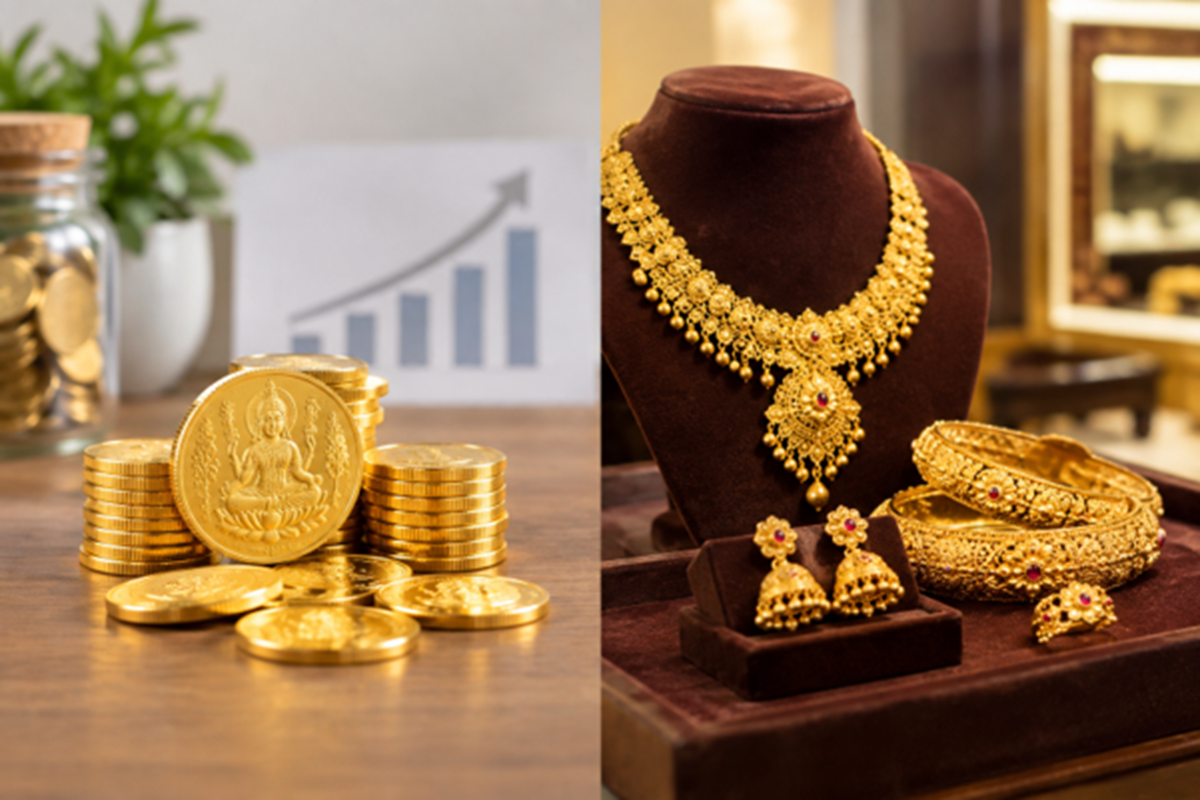
Gold coins are a straightforward way to own physical gold. They are available in different weights and are commonly offered in 24K purity with 999.9 fineness. The reference product page, for instance, lists 24K gold coins with 999.9 purity and clearly specified net weight and denomination.
This matters because purity tells you how much actual gold is present in the product. A 999.9 fineness coin contains 99.99% gold, making it a high-purity form of physical gold.
The gold coin price is influenced by the prevailing gold rate, the weight and the additional premium or costs associated with producing and selling the coin. Different weights can also have different prices per gram.
For an investor, the important point is that the product is primarily purchased for its gold content rather than for its appearance or craftsmanship.
Jewellery includes more than gold
When you buy a gold necklace, ring, bangle or pair of earrings, you are paying for more than the gold.
The final bill can include the value of the gold, making charges, taxes and, in some cases, charges associated with gemstones or other elements used in the piece.
Making charges cover the work involved in converting gold into a finished ornament. The amount can vary depending on the design and workmanship. A simple chain may have modest making charges, while an elaborate piece can cost more to produce.
This difference becomes important when you think about resale.
The money spent on making charges does not automatically become part of the gold’s value when you sell the jewellery. The buyer will be more concerned with factors such as purity and the net weight of gold in the piece.
That means a jewellery purchase can have considerable personal value without being the most cost-efficient way to accumulate gold.
Purity can differ between coins and jewellery
Purity is one of the first things you should check when buying physical gold.
Investment-oriented gold coins are commonly available in 24K (999.9) purity. The reference material specifically highlights 24K (999.9 gold coins and certification as important features.
Gold jewellery is often made using 22K gold because pure 24K gold is softer and less suitable for pieces that need to withstand regular handling and wear.
For example, 22K gold has a fineness of 916, meaning it contains 91.6% pure gold. The remaining portion consists of other metals added to improve strength and durability.
This does not mean that 22K jewellery is a poor purchase. It simply means that you should compare like with like when assessing the amount of gold you are buying.
Coins can have simpler pricing
One of the main reasons investors consider coins is that the pricing is easier to understand.
You can look at the weight, purity and quoted price and compare the cost with the prevailing gold rate. There may still be a premium over the underlying value of the metal, particularly for smaller denominations or specially designed coins, but no elaborate jewellery-making process is involved.
The gold coin price can also vary according to the weight you select. Smaller coins can be useful if you want to buy a modest quantity, while larger denominations may offer a different price per gram.
It is therefore worth comparing the final price rather than assuming that a particular weight automatically offers the best value.
Jewellery has an advantage coins cannot offer
One obvious reason people continue to choose jewellery despite the additional costs is that they can wear it.
A gold necklace can be worn at a wedding. A bangle can become part of everyday attire. A ring can mark an important occasion. Jewellery can also be passed from one generation to another.
These qualities give jewellery a purpose beyond investment.
A coin, on the other hand, is stored safely and brought out occasionally. It does not provide the same practical use or personal connection.
Therefore, if you are already planning to purchase jewellery for personal use, it can serve two purposes. You get an ornament that you can wear while retaining an asset whose underlying value is linked to gold.
The important thing is not to mistake the entire purchase price for the value of the gold itself.
Resale is an important consideration
Before buying physical gold, think about how you will sell it.
A gold coin with clear information about its weight and purity, along with appropriate certification and secure packaging, can make verification easier. Some investment-oriented coins are supplied in tamper-proof or assay-certified packaging, with details that help establish their authenticity and specifications.
However, you should always check the seller’s resale or buyback policy before purchasing. Do not assume that every seller will offer the same price or accept every gold product.
Jewellery resale works differently. The buyer may test the purity, calculate the net gold content and deduct applicable charges or account for wastage and other factors depending on the transaction.
You shouldn’t expect to recover the original making charges in full.
What about gold coin storage?
Storage is another practical difference.
A coin takes up very little space and can be stored in a home safe or bank locker. Since it is a compact form of physical gold, it can be easier to organise if you gradually accumulate different weights.
However, you should still store physical gold securely. Coins are valuable and should not simply be kept in an easily accessible place at home.
Jewellery also requires secure storage, and its shape can make it more cumbersome to organise, particularly if you own several pieces.
Which is better for investment?
If your primary objective is owning gold as an investment, gold coins have an edge over jewellery.
A high-purity coin allows you to buy physical gold without paying for an elaborate design or extensive craftsmanship. When a coin comes with clear weight and purity information, certification, and secure packaging, it’s easier to understand exactly what you are buying.
Jewellery makes more sense when you want the dual benefit of ownership and use.
For example, someone saving specifically for a future wedding may prefer jewellery because they will eventually wear the gold. Someone who wants to hold physical gold may find coins more appropriate.
The decision should therefore be based on the purpose of the purchase rather than the assumption that one form of gold is always better.
What should you check before buying gold coins?
If you decide to buy coins, do not focus only on the displayed price.
Check the following:
Purity: Look for the stated fineness, particularly if you are buying for investment.
Weight: Confirm the net gold weight rather than relying only on the denomination displayed in the product name.
Certification: Check whether the coin comes with appropriate certification and authentication details.
Packaging: Secure or tamper-evident packaging can provide an additional layer of assurance.
Total price: Compare the final amount you pay with the prevailing gold rate and understand any premium or additional charges.
Buyback terms: Find out how and where the coin can be resold and how the value will be calculated.
The reference material highlights several of these factors, including 999.9 purity, certified packaging, specified net weight and buyback arrangements.
What should you check before buying jewellery?
For jewellery, the checklist is slightly different.
Start by checking the purity and net gold weight. Then look at the making charges separately instead of simply considering the final bill.
If the jewellery contains gemstones, ask how their weight and value have been calculated. Also check the hallmark and make sure the invoice clearly records the relevant details.
Most importantly, compare the jewellery’s gold value with its total purchase price. This will help you understand how much you are paying for the metal and how much goes toward making and other costs.
Gold coins or jewellery: the final choice
Gold coins and gold jewellery both have a place in an Indian household, but they serve different purposes.
If you want high-purity physical gold for a straightforward investment, a gold coin is the more suitable option. You can choose from different weights, store it securely and track its value primarily through the underlying gold content.
If you want something you can wear, enjoy and eventually pass down, jewellery may be worth the additional cost. Its value isn’t purely financial because design, craftsmanship, and emotional significance also matter.
The gold coin price should therefore not be compared with a jewellery price simply by looking at the amount on the bill. Compare purity, net weight, additional charges, purchase premium and resale terms instead.
In simple terms, buy a coin when your priority is owning gold. Choose jewellery when you want to own gold in a form that you can wear and use.
Neither option is automatically right for everyone. The better choice matches the reason you are buying gold in the first place.